I can't believe it has been a almost a year since I last posted. So much has happened... I've worked in 2 more kitchens since then & had a host of incredibly good & incredibly bad experiences.
So, why the new blog name? I guess the reason behind the change is three-fold. First, I feel like its a better fit for where I am in life right now. When one's life is "on the line" it is usually in peril. Lately, I've felt like times have been pretty perilous. I am not experiencing a lot of stability. But with the instability has come a lot of growth. As a cook, a leader, & as a human in general.
Secondly, as Monsanto continues to torture small farmers like my dad I truly believe their lives are closer & closer to being on the line. Maybe not their physical lives, but their livelihoods. Everything they've worked their entire life to acheive is on the line.
Finally, being on the line is a restaurant term. When I'm at work I am literally working "on the line." I don't really know the history behind why a restaurant kitchen is called a line. A reasonable assumption would be because it is linear. We all stand in a row... But we all know what assuming does.
After I changed the name of the blog I found out that Grant Achatz has a new biography out called Life on the Line. Now I feel a lot less creative. But, for the record, I had no idea that book existed til I had already created this blog. wah wah.
Anyway, I'm back. I'm happy to be blogging again & I hope to continue to fill the interwebs with stories, food politics, insight, recipes, and a glimpse into life as a line cook & the daughter of a farmer who is battling Monsanto.
Happy Reading.
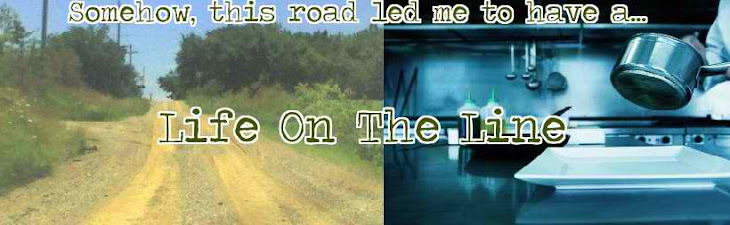
Follow my journey from farmer's daughter to line cook in the big city. My story of food activism, rural hardships, urban pitfalls & one hell of a long ride down a gravel road.
Showing posts with label monsanto. Show all posts
Showing posts with label monsanto. Show all posts
Thursday, September 30, 2010


Saturday, November 7, 2009
Check It Out
Whoever makes two ears of corn, or two blades of grass to grow where only one grew before, deserves better of mankind, and does more essential service to his country than the whole race of politicians put together.
- Jonathan Swift
With that said, check out my dad's interview with Food Chain Radio from this morning. You can find it by going to FoodChainRadio website and clicking on Episode 659 The Seed Giants.
- Jonathan Swift
With that said, check out my dad's interview with Food Chain Radio from this morning. You can find it by going to FoodChainRadio website and clicking on Episode 659 The Seed Giants.
Saturday, October 10, 2009
Monsanto is in big trouble
AGAIN....HOORAY
As many of you may know, Monsanto faced a class action lawsuit in 2003 in Anniston, Alabama. The suit had to do with chemical dumping and other pollution that left people in the town with severe health problems. Monsanto reached a $700 million settlement in this case.
It seems the same is happening again, and this time it's here in Illinois and much closer to Monsanto's home-base in St. Louis.
Over 80 years ago Monsanto incorporated a village by the same name along the banks of the Mississippi River. The village was (and is still today) ruled by the Sauget family, with the Monsanto company holding their grasp on local taxes and regulations. In the beginning, the Sauget family set their own environmental standards and the village of Monsanto was seen as a mecca for industry.
Today, the village name has changed to Sauget and the citizens of the small village are sick. Cancer, lung problems, and other health issues plauge the community. A group of citizens and several lawyers (including one from the Anniston case) are working to sue Monsanto and other industries released toxic PCB's and dioxins on the community.
Plaintiffs in the suit feel they were misled by the big businesses regarding the dangerous/hazardous nature of the substances being released into their community. Due to the population density of Sauget the problem could be even worse than that in Anniston.
Sadly, it seems that Monsanto's MO is to target communities where people are poor, less educated, and less likely to have a say in society. Hopefully, this lawsuit will draw even more attention to the heinous acts of this awful company.
And, just to be objective here I'll give both sides of the story - Monsanto claims this lawsuit has no grounds and the plaintiffs are merely after their money. Oh, thats right, I forgot they can do no wrong.
Get the full story here
As many of you may know, Monsanto faced a class action lawsuit in 2003 in Anniston, Alabama. The suit had to do with chemical dumping and other pollution that left people in the town with severe health problems. Monsanto reached a $700 million settlement in this case.
It seems the same is happening again, and this time it's here in Illinois and much closer to Monsanto's home-base in St. Louis.
Over 80 years ago Monsanto incorporated a village by the same name along the banks of the Mississippi River. The village was (and is still today) ruled by the Sauget family, with the Monsanto company holding their grasp on local taxes and regulations. In the beginning, the Sauget family set their own environmental standards and the village of Monsanto was seen as a mecca for industry.
Today, the village name has changed to Sauget and the citizens of the small village are sick. Cancer, lung problems, and other health issues plauge the community. A group of citizens and several lawyers (including one from the Anniston case) are working to sue Monsanto and other industries released toxic PCB's and dioxins on the community.
Plaintiffs in the suit feel they were misled by the big businesses regarding the dangerous/hazardous nature of the substances being released into their community. Due to the population density of Sauget the problem could be even worse than that in Anniston.
Sadly, it seems that Monsanto's MO is to target communities where people are poor, less educated, and less likely to have a say in society. Hopefully, this lawsuit will draw even more attention to the heinous acts of this awful company.
And, just to be objective here I'll give both sides of the story - Monsanto claims this lawsuit has no grounds and the plaintiffs are merely after their money. Oh, thats right, I forgot they can do no wrong.
Get the full story here
Sunday, October 4, 2009
Reflections
Lately I've been thinking about how I got to the place in my life where I am right now. If someone had asked me 3 years ago what I'd be doing for a living my answer certainly wouldn't have been cooking. It seems crazy to get PAID to cook food.
Many of you may not know that just about 3 years ago I was in my senior year of college at the University of Illinois at Chicago pursing a degree in psychology. From as long ago as I can remember I always wanted to help people so it seemed a natural progression to go into the field of psychology.
 I always loved to cook. It was something I grew up watching my grandma and my mom do and I knew good food made people happy. During college when life was stressful I would cook. It was a way to calm down and connect. Cooking was a form of instant gratification. Never a career path, always a hobby, sometimes a joke. Anytime studies got rough I would joke that I was going to drop out and open a restaurant.
During a summer away from college working as an Environmental Education director at a summer camp I had a lot of time to think. I had the opportunity to cook for a lot of staff members at the camp as well as many of the children. I knew in the back of my mind psychology was an interest not a passion and I knew in the back of my mind that cooking made me happy. The realization came to the front of my mind when a 9 year old asked me "Are you a chef?"
That question hit me like a ton of bricks. Why aren't I a chef? I couldn't formulate a reason. I spent the next several weeks going over and over this question in my head. I spoke with some friends and co-workers and made my decision.
When I returned to Chicago I made the choice to leave UIC and pursue a culinary degree at Kendall College. It was a huge crazy step but I had never felt better. I took a job as a breakfast cook at a bed & breakfast and began my new life.
Even at this point I still had no idea why I wanted to be a cook. I just knew that I loved it. I didn't know what I wanted to do with a career as a cook and was worried I wouldn't feel fulfilled without "helping people.
When the problems with Monsanto began to really come to a head for my parents I felt a lot of mixed emotions. I was scared Monsanto would sue my dad and take everything he's worked so hard for, I was angry at an evil company, I felt helpless being so far away and not there with my mom and dad, and I felt guilty for having a job that wasn't in jeopardy.
But, it was in these moments that I realized why it was my destiny to become a cook. I am the farmer's daughter who grew up to be the cook. I live in both worlds of food now. Where food comes from and where food goes. I am in the best possible place as a cook.
And, it was in those moments that I realized I can help people as a cook. This blog has become my way to not feel scared, angry, helpless and guilty. I realize more and more each day what my role is and will be. As a cook and an educator. Even in the passing moments at work when I'm able to talk about what kind of greens we are cleaning because I've seen them growing in my mom's garden. Or when someone has a question about Genetically Modified foods. I am helping people.
Thomas Keller says there is no such thing as perfect food only the idea of it. And our role as a chef is to strive towards perfection not to achieve it, but rather, to make people happy. That is what cooking is all about. For me this rings very true but for me it goes beyond making people happy with eating the food. I want people to have the experience of food.
To have just one guest who understands their meal came from a farmer's field or a gardener's greenhouse not from my kitchen would mean success to me.
So, now I am a cook and I have my amazing parents to thank for their support in my decision.
To my grandma for always cooking and letting me help
To my mom who taught me that tomatoes come from your garden not the grocery store and for introducing me to the vidalia.
And to my dad for showing me what real work is. For getting up before the sun and working until the work is done.
And, both of my parents for doing something they love even if it means they'll never be rich.
Dad, no matter what Monsanto does to us, everything you've worked for you've earned and that is all that matters.
I am a cook. Today, I understand why.
Many of you may not know that just about 3 years ago I was in my senior year of college at the University of Illinois at Chicago pursing a degree in psychology. From as long ago as I can remember I always wanted to help people so it seemed a natural progression to go into the field of psychology.
 I always loved to cook. It was something I grew up watching my grandma and my mom do and I knew good food made people happy. During college when life was stressful I would cook. It was a way to calm down and connect. Cooking was a form of instant gratification. Never a career path, always a hobby, sometimes a joke. Anytime studies got rough I would joke that I was going to drop out and open a restaurant.
During a summer away from college working as an Environmental Education director at a summer camp I had a lot of time to think. I had the opportunity to cook for a lot of staff members at the camp as well as many of the children. I knew in the back of my mind psychology was an interest not a passion and I knew in the back of my mind that cooking made me happy. The realization came to the front of my mind when a 9 year old asked me "Are you a chef?"
That question hit me like a ton of bricks. Why aren't I a chef? I couldn't formulate a reason. I spent the next several weeks going over and over this question in my head. I spoke with some friends and co-workers and made my decision.
When I returned to Chicago I made the choice to leave UIC and pursue a culinary degree at Kendall College. It was a huge crazy step but I had never felt better. I took a job as a breakfast cook at a bed & breakfast and began my new life.
Even at this point I still had no idea why I wanted to be a cook. I just knew that I loved it. I didn't know what I wanted to do with a career as a cook and was worried I wouldn't feel fulfilled without "helping people.
When the problems with Monsanto began to really come to a head for my parents I felt a lot of mixed emotions. I was scared Monsanto would sue my dad and take everything he's worked so hard for, I was angry at an evil company, I felt helpless being so far away and not there with my mom and dad, and I felt guilty for having a job that wasn't in jeopardy.
But, it was in these moments that I realized why it was my destiny to become a cook. I am the farmer's daughter who grew up to be the cook.
 I live in both worlds of food now. Where food comes from and where food goes. I am in the best possible place as a cook.
 And, it was in those moments that I realized I can help people as a cook. This blog has become my way to not feel scared, angry, helpless and guilty. I realize more and more each day what my role is and will be. As a cook and an educator. Even in the passing moments at work when I'm able to talk about what kind of greens we are cleaning because I've seen them growing in my mom's garden. Or when someone has a question about Genetically Modified foods. I am helping people.
Thomas Keller says there is no such thing as perfect food only the idea of it. And our role as a chef is to strive towards perfection not to achieve it, but rather, to make people happy. That is what cooking is all about. For me this rings very true but for me it goes beyond making people happy with eating the food. I want people to have the experience of food.
To have just one guest who understands their meal came from a farmer's field or a gardener's greenhouse not from my kitchen would mean success to me.
So, now I am a cook and I have my amazing parents to thank for their support in my decision.
To my grandma
 for always cooking and letting me help
To my mom
 who taught me that tomatoes come from your garden not the grocery store and for introducing me to the vidalia.
 And to my dad
 for showing me what real work is. For getting up before the sun and working until the work is done.
 And, both of my parents for doing something they love even if it means they'll never be rich.
Dad, no matter what Monsanto does to us, everything you've worked for you've earned and that is all that matters.
I am a cook. Today, I understand why.

Friday, October 2, 2009
One Small Victory
And I'll take it!
On September 22nd a US District Court in Northern California ruled against Monsanto's Roundup Ready (GM) Sugar Beets!
The Court ruled that the USDA had not adequately evaluated the environmental and economic risks of the sugar beets. The USDA did not prepare an environmental impact statement before 1.1 million US acres were sown with Monsanto's beets. This is not surprising considering Monsanto's infiltration of the USDA.
But, at least the Court has woken up to Monsanto's history of bullshit.
The dangers of these beets are two pronged. Roundup Ready products promote the growth of weeds that are extremely tolerant to weed killers and are not easily erradicated by conventional means. Also, organic and conventional beet farmers are at risk of cross-pollination due to wind when GM sugar beets are planted in the same area. Obviously this damages the integrity of the REAL food being grown in a conventional manner.
The Court ruled that the USDA must do a rigorous report of the environmental and economic impact of growing these beets and be ready to present information in October. Unfortunately, in my opinion, one month is not adequate time to do a "rigorous" study of anything...
As usual, Monsanto is sweeping this under the rug. Stating the ruling is about "procedural" problems and not questions of food safety.
Assholes.
Well, it was a small victory, and I'll take it!
Thanks to Cathy @ The Fund for making me aware of this ruling.
On September 22nd a US District Court in Northern California ruled against Monsanto's Roundup Ready (GM) Sugar Beets!
The Court ruled that the USDA had not adequately evaluated the environmental and economic risks of the sugar beets. The USDA did not prepare an environmental impact statement before 1.1 million US acres were sown with Monsanto's beets. This is not surprising considering Monsanto's infiltration of the USDA.
But, at least the Court has woken up to Monsanto's history of bullshit.
The dangers of these beets are two pronged. Roundup Ready products promote the growth of weeds that are extremely tolerant to weed killers and are not easily erradicated by conventional means. Also, organic and conventional beet farmers are at risk of cross-pollination due to wind when GM sugar beets are planted in the same area. Obviously this damages the integrity of the REAL food being grown in a conventional manner.
The Court ruled that the USDA must do a rigorous report of the environmental and economic impact of growing these beets and be ready to present information in October. Unfortunately, in my opinion, one month is not adequate time to do a "rigorous" study of anything...
As usual, Monsanto is sweeping this under the rug. Stating the ruling is about "procedural" problems and not questions of food safety.
Assholes.
Well, it was a small victory, and I'll take it!
Thanks to Cathy @ The Fund for making me aware of this ruling.
Thursday, October 1, 2009
Monsanto News
Not much has changed in the way of Monsanto. They are still an evil, bullying company. But, it seems that recently people are opening up their eyes even more to the destruction they are causing throughout the Unted States and the world.
On August 7th the Organization for Competitive Markets drew a record number of farmers, ranchers, seed distributors and seed cleaners (like my dad) for their conference regarding anti-competitive behaviors by companies (Monsanto) in the agriculture industry. Most importantly, the conference was attended by two top Obama Administration officials given the task of (finally) enforcing anti-trust laws which were ignored by the Bush Administration. Both the Department of Justice and Department of Agriculture were in attendence and announced major changes on Agriculture anti-trust and competition. Both the Department of Justice and the Department of Agriculture will be hosting workshops to get feedback from farmers to truly find out the impact anti-competitive behavior has on the consumer.
So far, this news has stayed out of major media and when doing searches I haven't found many other bloggers mentioning this big shift either. I must say, Monsanto has already done plenty to implicate themselves and draw a closer look from Washington.
In a September 30th article in the Olney Daily Mail Steve Hixon (my daddy!) was quoted as saying he sees this as a positive step and has "expectations that the Justice Department will finally enforce accountability" http://www.olneydailymail.com/news/x1991993902/Study-of-seed-issue-draws-plenty-of-interest
Although I personally would rather see the elimination of Genetically Modified foods and Monsanto Corporation, this certainly is a step in the right direction in offering farmers more choices when it comes to purchasing seeds.
Here's to hoping some of the CHANGE President Obama comes to agriculture in America.
On August 7th the Organization for Competitive Markets drew a record number of farmers, ranchers, seed distributors and seed cleaners (like my dad) for their conference regarding anti-competitive behaviors by companies (Monsanto) in the agriculture industry. Most importantly, the conference was attended by two top Obama Administration officials given the task of (finally) enforcing anti-trust laws which were ignored by the Bush Administration. Both the Department of Justice and Department of Agriculture were in attendence and announced major changes on Agriculture anti-trust and competition. Both the Department of Justice and the Department of Agriculture will be hosting workshops to get feedback from farmers to truly find out the impact anti-competitive behavior has on the consumer.
So far, this news has stayed out of major media and when doing searches I haven't found many other bloggers mentioning this big shift either. I must say, Monsanto has already done plenty to implicate themselves and draw a closer look from Washington.
In a September 30th article in the Olney Daily Mail Steve Hixon (my daddy!) was quoted as saying he sees this as a positive step and has "expectations that the Justice Department will finally enforce accountability" http://www.olneydailymail.com/news/x1991993902/Study-of-seed-issue-draws-plenty-of-interest
Although I personally would rather see the elimination of Genetically Modified foods and Monsanto Corporation, this certainly is a step in the right direction in offering farmers more choices when it comes to purchasing seeds.
Here's to hoping some of the CHANGE President Obama comes to agriculture in America.
Wednesday, September 30, 2009
WWOOF
I was recently introduced to an amazing organization called WWOOF. World Wide Opportunities On Organic Farms was started in 1971 as a way to connect people from all over the world to share more sustainable ways of living. In return for volunteer work on the hosts' farm volunteers receive a place to stay, meals, and numerous opportunities to learn about the organic lifestyle.
Volunteers do not pay for their stay and hosts do not pay their volunteers for work.
WWOOF hosts can be found in almost every country around the world. So, no matter what your interest I'm sure there is a farm, community, gardener or SOMEONE who fits your desire.
You can find more information by visiting wwoof.org
The program I am most interested in is in the West African country of Sierra Leone. WWOOF has a school garden program in SL that is teaching children how to grow their own food. The food is then served to the children and staff of the school and any surplus can be sold to keep the school running, or sent home to feed the often impoverished students' families.
Anyone who knows me knows my soft spot for children. And, anything we can do to teach sustainable farming/living in Africa will be one less way Monsanto can invade the lives of people in developing countries.
Monsanto is already hard at work developing GM rice and wheat specifically to market to developing countries. I would love to see Sierra Leone and other African nations reject what Monsanto has to "offer"
According to one article Monsanto is trying to be the "johnny appleseed" of Africa. They are marketing a "high yield" hybrid maize containing fertilizer and herbicide. The maize is being called Xoshindlala a Zula word meaning to chase away hunger. Not shockingly, this is not an aid project either, Monsanto is marketing and selling this crap (yea I said it) for profit to African farmers. So, here they go - trying to convince yet another group of farmers that monoculture is the wave of the future.
Another reason to go WWOOF in Africa? Monsanto also has it's hand in the "relief" food America sends to African nations. Monsanto PROFITS from hunger in Africa due to their government contracts to provide relief food. Monsanto would hate to see Africans learning to farm on their own and SUSTAIN rather than maintain life as they are doing currently.
The UN recently released a report saying that Africa's best hope for the future is organic agriculture. Yet the Senate Foreign Relations Committee has passed S.384, the Global Food Security Act, that would require "research on biotechnological advances appropriate to local ecological conditions, including genetically modified technology" as a condition of US aid.
Instead of cynically cloaking corporate welfare for chemical companies like Monsanto in agriculture aid packages, why not support the United Nations Environment Program's Green Economy Initiative?
A new survey by the UN Conference on Trade and the Environment and UNEP in East Africa found that over 90 per cent of studies show that organic or near organic agriculture had benefits for soil fertility; water control; improved water tables, carbon sequestration and biodiversity.
This allows farmers to extend the growing season in marginal areas. The research in East Africa was among 1.6 million organic or near organic farmers from seven countries working on 1.4 million hectares.
Other findings include an increase in crop yields of 128 per cent since switching
In other disturbing news - Monsanto is attempting to forge a partnership with the CARE organization - a high profile US based food-aid agency. It seems the goal of the meeting is to use the food aid agency to test and distribute their genetically-altered seeds among poor farmers. What a load of bullshit. If CARE goes along with this they are making a terrible mistake.
So please, join WWOOF and help promote SUSTAINABLE living.
For information on statistics I have posted please visit the following websites for full articles.
http://www.etcgroup.org/en/materials/publications.html?pub_id=376
http://www.scribd.com/doc/13670789/Voices-from-Africa-African-Farmers-Environmentalists-Speak-Out-Against-a-New-Green-Revolution-in-Africa
http://e360.yale.edu/content/digest.msp?id=1550
Volunteers do not pay for their stay and hosts do not pay their volunteers for work.
WWOOF hosts can be found in almost every country around the world. So, no matter what your interest I'm sure there is a farm, community, gardener or SOMEONE who fits your desire.
You can find more information by visiting wwoof.org
The program I am most interested in is in the West African country of Sierra Leone. WWOOF has a school garden program in SL that is teaching children how to grow their own food. The food is then served to the children and staff of the school and any surplus can be sold to keep the school running, or sent home to feed the often impoverished students' families.
Anyone who knows me knows my soft spot for children. And, anything we can do to teach sustainable farming/living in Africa will be one less way Monsanto can invade the lives of people in developing countries.
Monsanto is already hard at work developing GM rice and wheat specifically to market to developing countries. I would love to see Sierra Leone and other African nations reject what Monsanto has to "offer"
According to one article Monsanto is trying to be the "johnny appleseed" of Africa. They are marketing a "high yield" hybrid maize containing fertilizer and herbicide. The maize is being called Xoshindlala a Zula word meaning to chase away hunger. Not shockingly, this is not an aid project either, Monsanto is marketing and selling this crap (yea I said it) for profit to African farmers. So, here they go - trying to convince yet another group of farmers that monoculture is the wave of the future.
Another reason to go WWOOF in Africa? Monsanto also has it's hand in the "relief" food America sends to African nations. Monsanto PROFITS from hunger in Africa due to their government contracts to provide relief food. Monsanto would hate to see Africans learning to farm on their own and SUSTAIN rather than maintain life as they are doing currently.
The UN recently released a report saying that Africa's best hope for the future is organic agriculture. Yet the Senate Foreign Relations Committee has passed S.384, the Global Food Security Act, that would require "research on biotechnological advances appropriate to local ecological conditions, including genetically modified technology" as a condition of US aid.
Instead of cynically cloaking corporate welfare for chemical companies like Monsanto in agriculture aid packages, why not support the United Nations Environment Program's Green Economy Initiative?
A new survey by the UN Conference on Trade and the Environment and UNEP in East Africa found that over 90 per cent of studies show that organic or near organic agriculture had benefits for soil fertility; water control; improved water tables, carbon sequestration and biodiversity.
This allows farmers to extend the growing season in marginal areas. The research in East Africa was among 1.6 million organic or near organic farmers from seven countries working on 1.4 million hectares.
Other findings include an increase in crop yields of 128 per cent since switching
In other disturbing news - Monsanto is attempting to forge a partnership with the CARE organization - a high profile US based food-aid agency. It seems the goal of the meeting is to use the food aid agency to test and distribute their genetically-altered seeds among poor farmers. What a load of bullshit. If CARE goes along with this they are making a terrible mistake.
So please, join WWOOF and help promote SUSTAINABLE living.
For information on statistics I have posted please visit the following websites for full articles.
http://www.etcgroup.org/en/materials/publications.html?pub_id=376
http://www.scribd.com/doc/13670789/Voices-from-Africa-African-Farmers-Environmentalists-Speak-Out-Against-a-New-Green-Revolution-in-Africa
http://e360.yale.edu/content/digest.msp?id=1550
Monday, July 20, 2009
What is HR 2749?
Awhile ago I posted a link on my facebook urging people to read and understand HR 2749. Maybe you missed it - so I'm going to break down HR 2749 for you the way I understand it.
HR 2749 or the Food Safety Enhancement Act of 2009 is an attempt to address the problems with factory farming in the United States. But, the way it is now the only thing this bill will do is undermine the few good things we have left in American agriculture - the small farmers producing for our local markets.
Upon first look the bill poses as a way to address the rising problems of contaminaton from foodborne pathogens as a result of the reliance on industrialized farming in the United States. All the contamination issues we have seen in the last few years have been linked to huge factory farming establishments. Not once has a small farmer been linked to an outbreak. Yet, HR 2749 will drive small farmers from endangered species to extinct.
For example, in this bill the FDA will require industrialized agriculture facilities and farmers to register and pay yearly fees. If a small farmer choses to make jam and sell it at the local farmers market he will be required to register with the FDA and pay a $500 fee. The food giant Del Monte will be required to do the same. This bill offers no consideration of the size of the company when assessing fees.
The Federal oversight of small farmers is over-reaching and overbearing in this bill. I understand that disgusting, dirty, filth-ridden factory farms need to be scrutinized. But really, must we make life even harder for the men and women who are trying to keep us healthy and vital by being stewards to the land and providing us with delicious local foods?
Another reality of this bill is the complete disregard for religion when it comes to Amish farmers. Under this bill all producers will be required by law to register electronically with the FDA. Amish farmers are already saying they refuse to register as it violates their religious beliefs. Religion doesn't matter to HR 2749. If a farmer knowingly violates a provision of the bill he or she can be sentenced up to 10 years in prison and up to $100,000 in fines.
Most importantly, the bill does not even address the underlying cause of food safety problems which is our reliance on industrialized agriculture. Rather than breaking up these food giants and taking America back to the small farmer the bill masks the problem with fees and registrations. Last time I checked $500 and mountains of paperwork won't keep e.coli from growing in a filthy factory. But hey, what do I know?
So, now that you know a bit more about HR 2749 please feel free and do more research on your own to get the whole scoop. You can find more information on this bill on Farm-to-Consumer Legal Defense Fund website at www.farmtoconsumer.org. For even more information on HR 2749 please visit http://www.infowars.com/hr-2749-totalitarian-control-of-the-food-supply/
Most importantly - TAKE ACTION. Please contact your congressman and senators and tell them how you feel about HR 2749. Fight for your right to eat real food. You can find your representatives by using the "finder" tool on www.congress.org or you can fill out the online petition against the bill at the following address http://www.ftcldf.org/petitions_new.htm and click on the link to Oppose HR 2749.
HR 2749 or the Food Safety Enhancement Act of 2009 is an attempt to address the problems with factory farming in the United States. But, the way it is now the only thing this bill will do is undermine the few good things we have left in American agriculture - the small farmers producing for our local markets.
Upon first look the bill poses as a way to address the rising problems of contaminaton from foodborne pathogens as a result of the reliance on industrialized farming in the United States. All the contamination issues we have seen in the last few years have been linked to huge factory farming establishments. Not once has a small farmer been linked to an outbreak. Yet, HR 2749 will drive small farmers from endangered species to extinct.
For example, in this bill the FDA will require industrialized agriculture facilities and farmers to register and pay yearly fees. If a small farmer choses to make jam and sell it at the local farmers market he will be required to register with the FDA and pay a $500 fee. The food giant Del Monte will be required to do the same. This bill offers no consideration of the size of the company when assessing fees.
The Federal oversight of small farmers is over-reaching and overbearing in this bill. I understand that disgusting, dirty, filth-ridden factory farms need to be scrutinized. But really, must we make life even harder for the men and women who are trying to keep us healthy and vital by being stewards to the land and providing us with delicious local foods?
Another reality of this bill is the complete disregard for religion when it comes to Amish farmers. Under this bill all producers will be required by law to register electronically with the FDA. Amish farmers are already saying they refuse to register as it violates their religious beliefs. Religion doesn't matter to HR 2749. If a farmer knowingly violates a provision of the bill he or she can be sentenced up to 10 years in prison and up to $100,000 in fines.
Most importantly, the bill does not even address the underlying cause of food safety problems which is our reliance on industrialized agriculture. Rather than breaking up these food giants and taking America back to the small farmer the bill masks the problem with fees and registrations. Last time I checked $500 and mountains of paperwork won't keep e.coli from growing in a filthy factory. But hey, what do I know?
So, now that you know a bit more about HR 2749 please feel free and do more research on your own to get the whole scoop. You can find more information on this bill on Farm-to-Consumer Legal Defense Fund website at www.farmtoconsumer.org. For even more information on HR 2749 please visit http://www.infowars.com/hr-2749-totalitarian-control-of-the-food-supply/
Most importantly - TAKE ACTION. Please contact your congressman and senators and tell them how you feel about HR 2749. Fight for your right to eat real food. You can find your representatives by using the "finder" tool on www.congress.org or you can fill out the online petition against the bill at the following address http://www.ftcldf.org/petitions_new.htm and click on the link to Oppose HR 2749.
The High Cost of Cheap Food
My mom sent me this article written by a woman named Megan Nix for the Denver Post. It is one of the most well-written and easy to understand articles I have seen to date regarding the "food safety" bills. I hope she doesn't mind me re-posting it here. Enjoy
The High Cost of Cheap Food
I used to find Flaming Hot Cheetos, bagged pickles, and the occasional plate of fried chicken in my classroom when I taught Senior English in Louisiana.
I allowed some of my students to eat at their desks after lunch. I had to; there were three pregnant seniors in my fourth period.
Shayna, who was in her third trimester during her last semester of high school, mostly snacked on packets of those horribly orange peanut butter crackers. Over half of my class was obese. After pizza or macaroni or hamburgers from the cafeteria, they'd fall asleep against their will, come to, apologize, then nod off again.
My students were kids who carried iPhones and wore brand-name shoes. Eighty percent were black, 98 percent were low-income. They'd been raised to look as good as they could, but eat as cheaply as possible.
For awhile, you can ignore poverty in schools, outbreaks of cookie dough E. coli, and the fact that 27 percent of our country's children are obese. But they're all connected — and these layers of bad news will eventually weigh one down.
I found this statistic a little harder to overlook: For the first time in 200 years, today's children have a lower life expectancy than their parents.
Unhealthy school lunches are certainly one reason. Here's another: Most of our food comes from huge factory farms that are government-subsidized to produce food products quickly but not nutritiously.
A partial list of Health and Human Service's recalled foods so far this summer include:
• Lewis Laboratories' chocolate flavor nutrition drink;
• C.F. Sauer gravies and sauce mixes;
• Publix Brand chocolate and vanilla whey protein;
• Malt-o-Meal Maple & Brown Sugar; and
• Three types of seasonings from Kroger.
There aren't any unfamiliar family names up there because smaller, organic farms abide by the rules of nature: You are stewards of your stock; you allow the soil to regenerate; and you don't add dry milk and MSG to everything, then recall it a month later. You learn the names of the plants you're eating, and you connect a chicken sandwich to a living thing with feathers — something the fifth- grade students I worked with couldn't do. The bigger farms are the ones responsible for the litany of gone-wrong products.
The most recent "good news" is that the FDA is pushing for "preventative process controls" through the Food Safety Modernization Act of 2009 (HR 875) and the Food Safety Enhancement Act (HR 2749), in order "to protect the public health by preventing food-borne illness and ensuring the safety of food." Problem is, the process controls the government will deem as necessary will likely be too expensive for small organic farmers who are doing more to keep this country healthy than the huge agribusiness companies (Tyson, Sedexho, Hormel) who can buy bigger freezers and continue to sell nicely wrapped crap.
What the passing of HR 875 and 2749 could mean is a loss of organic, small-farm options and a reduction of both the shopper's autonomy and the good things that are happening in the food world today.
Endangered are farmers' markets, Community Supported Agriculture, and programs like the Farm to Cafeteria initiative, which fills cafeterias with fresh heads of lettuce and teaches kids that accountability can mean nurturing little green lives. These programs banish the resentment often extended toward the gourmet, neo-hippie organic movement. Supplying cafeterias with local organic food isn't fancy; it's cheaper than skipping lunch. In the long run, our tax dollars wouldn't subsidize the petroleum that keep factories surging, trucks transporting our tomatoes, and our health insurance bills skyrocketing.
In the long run, I would like for Shayna's little girl to have a banana when she's hungry in the afternoon and dirty fingernails from digging in a garden, not a chin covered in garish orange crumbs.
Are these aspirations likely? One in three children today will develop Type 2 diabetes (one in two if they're black or Hispanic). It's partly because we aren't eating diversified foods anymore, and the FDA's new plans to protect factory farms will ensure that we continue to eat a fairly homogenized diet of refined sugars.
According to Vandana Shiva, an Indian crop ecologist quoted in Barbara Kingsolver's book "Animal, Vegetable, Miracle," over the course of history, humans have consumed over 80,000 plant species. That number has now been reduced to eight species, with a continuous honing in on modified canola, corn and soy.
When Kingsolver wrote the book in 2007, only six companies controlled 98 percent of the world's seed sales (Monsanto, Syngenta, DuPont, Mitsui, Aventis, and Dow), and they continue to desecrate land. Juggernauts like Monsanto send 330 small farm operators off their land a week.
In a nutshell, government regulations will soon favor genetically modified (or GMO) seeds over organic seeds, and organic seeds might eventually become illegal.
Hand-planted kale and preservative-less poultry might be things of the past. The FDA says requiring eggs to be kept at 45 degrees will make us healthier, but I've owned chickens, and their eggs are like silk when it's 60 and sunny.
The standard that food providers should be held to is purity of process and intent. We don't need to add bad things to our food. Agribusiness doesn't promote food safety, it swells with immoral shortcuts (a thousand chickens in a bedroom- sized space, soil made prematurely infertile, etc.).
What we need to do is take a good, hard look at what "safe" means.
Take a garden. Plant what grows best in your sun. Water the leaves, the roots. Walk through your rows. (If you don't have a yard, that's what urban gardens are for.)
Now take another garden. Grow it long and wide, cutting away the ecosystems along its edges. Decimate the birds and the bugs. Spray it with regulatory chemicals to ward off the changes provided by the wind and the rain, the nutrient highways for our food.
Which one would you call "safe"?
I tried to teach my kids how to write, but I also told them what I'd learned: that an adult needs eight hours of sleep, that homemade bread and hand-written letters are second to none. That, as Annie Dillard said, "How we spend our days is, of course, how we spend our years."
On a more human level, the current statistics mean that less of our kids' days are spent learning, whisk in hand, how their grandma's wrist turned yolks in a bowl. We are unaccustomed to bugs in our lettuce, fish with heads, berries covered in the harvest's dust.
The situation here is honest food; the deeper story is our respect for human life. Lose the first, and you lose the second, too.
I might not have much to hand down to my kids (when I have them). But I do have a recipe for sweet potato bread and a dad whose knees are muddy all summer long from gardening. I'd like to give my children shiny vegetables, basil that leans into the sun, and teach them how to smell a crust that's done. If the worsening economy means our kids might inherit less, then we should be giving them longer lives to live.
You can reach Ms. Nix at www.megannix.com or by email at thenixonary@gmail.com
The High Cost of Cheap Food
I used to find Flaming Hot Cheetos, bagged pickles, and the occasional plate of fried chicken in my classroom when I taught Senior English in Louisiana.
I allowed some of my students to eat at their desks after lunch. I had to; there were three pregnant seniors in my fourth period.
Shayna, who was in her third trimester during her last semester of high school, mostly snacked on packets of those horribly orange peanut butter crackers. Over half of my class was obese. After pizza or macaroni or hamburgers from the cafeteria, they'd fall asleep against their will, come to, apologize, then nod off again.
My students were kids who carried iPhones and wore brand-name shoes. Eighty percent were black, 98 percent were low-income. They'd been raised to look as good as they could, but eat as cheaply as possible.
For awhile, you can ignore poverty in schools, outbreaks of cookie dough E. coli, and the fact that 27 percent of our country's children are obese. But they're all connected — and these layers of bad news will eventually weigh one down.
I found this statistic a little harder to overlook: For the first time in 200 years, today's children have a lower life expectancy than their parents.
Unhealthy school lunches are certainly one reason. Here's another: Most of our food comes from huge factory farms that are government-subsidized to produce food products quickly but not nutritiously.
A partial list of Health and Human Service's recalled foods so far this summer include:
• Lewis Laboratories' chocolate flavor nutrition drink;
• C.F. Sauer gravies and sauce mixes;
• Publix Brand chocolate and vanilla whey protein;
• Malt-o-Meal Maple & Brown Sugar; and
• Three types of seasonings from Kroger.
There aren't any unfamiliar family names up there because smaller, organic farms abide by the rules of nature: You are stewards of your stock; you allow the soil to regenerate; and you don't add dry milk and MSG to everything, then recall it a month later. You learn the names of the plants you're eating, and you connect a chicken sandwich to a living thing with feathers — something the fifth- grade students I worked with couldn't do. The bigger farms are the ones responsible for the litany of gone-wrong products.
The most recent "good news" is that the FDA is pushing for "preventative process controls" through the Food Safety Modernization Act of 2009 (HR 875) and the Food Safety Enhancement Act (HR 2749), in order "to protect the public health by preventing food-borne illness and ensuring the safety of food." Problem is, the process controls the government will deem as necessary will likely be too expensive for small organic farmers who are doing more to keep this country healthy than the huge agribusiness companies (Tyson, Sedexho, Hormel) who can buy bigger freezers and continue to sell nicely wrapped crap.
What the passing of HR 875 and 2749 could mean is a loss of organic, small-farm options and a reduction of both the shopper's autonomy and the good things that are happening in the food world today.
Endangered are farmers' markets, Community Supported Agriculture, and programs like the Farm to Cafeteria initiative, which fills cafeterias with fresh heads of lettuce and teaches kids that accountability can mean nurturing little green lives. These programs banish the resentment often extended toward the gourmet, neo-hippie organic movement. Supplying cafeterias with local organic food isn't fancy; it's cheaper than skipping lunch. In the long run, our tax dollars wouldn't subsidize the petroleum that keep factories surging, trucks transporting our tomatoes, and our health insurance bills skyrocketing.
In the long run, I would like for Shayna's little girl to have a banana when she's hungry in the afternoon and dirty fingernails from digging in a garden, not a chin covered in garish orange crumbs.
Are these aspirations likely? One in three children today will develop Type 2 diabetes (one in two if they're black or Hispanic). It's partly because we aren't eating diversified foods anymore, and the FDA's new plans to protect factory farms will ensure that we continue to eat a fairly homogenized diet of refined sugars.
According to Vandana Shiva, an Indian crop ecologist quoted in Barbara Kingsolver's book "Animal, Vegetable, Miracle," over the course of history, humans have consumed over 80,000 plant species. That number has now been reduced to eight species, with a continuous honing in on modified canola, corn and soy.
When Kingsolver wrote the book in 2007, only six companies controlled 98 percent of the world's seed sales (Monsanto, Syngenta, DuPont, Mitsui, Aventis, and Dow), and they continue to desecrate land. Juggernauts like Monsanto send 330 small farm operators off their land a week.
In a nutshell, government regulations will soon favor genetically modified (or GMO) seeds over organic seeds, and organic seeds might eventually become illegal.
Hand-planted kale and preservative-less poultry might be things of the past. The FDA says requiring eggs to be kept at 45 degrees will make us healthier, but I've owned chickens, and their eggs are like silk when it's 60 and sunny.
The standard that food providers should be held to is purity of process and intent. We don't need to add bad things to our food. Agribusiness doesn't promote food safety, it swells with immoral shortcuts (a thousand chickens in a bedroom- sized space, soil made prematurely infertile, etc.).
What we need to do is take a good, hard look at what "safe" means.
Take a garden. Plant what grows best in your sun. Water the leaves, the roots. Walk through your rows. (If you don't have a yard, that's what urban gardens are for.)
Now take another garden. Grow it long and wide, cutting away the ecosystems along its edges. Decimate the birds and the bugs. Spray it with regulatory chemicals to ward off the changes provided by the wind and the rain, the nutrient highways for our food.
Which one would you call "safe"?
I tried to teach my kids how to write, but I also told them what I'd learned: that an adult needs eight hours of sleep, that homemade bread and hand-written letters are second to none. That, as Annie Dillard said, "How we spend our days is, of course, how we spend our years."
On a more human level, the current statistics mean that less of our kids' days are spent learning, whisk in hand, how their grandma's wrist turned yolks in a bowl. We are unaccustomed to bugs in our lettuce, fish with heads, berries covered in the harvest's dust.
The situation here is honest food; the deeper story is our respect for human life. Lose the first, and you lose the second, too.
I might not have much to hand down to my kids (when I have them). But I do have a recipe for sweet potato bread and a dad whose knees are muddy all summer long from gardening. I'd like to give my children shiny vegetables, basil that leans into the sun, and teach them how to smell a crust that's done. If the worsening economy means our kids might inherit less, then we should be giving them longer lives to live.
You can reach Ms. Nix at www.megannix.com or by email at thenixonary@gmail.com
Saturday, May 30, 2009
whats going on here!?!?
No, its not chalk in the eraser (that's for you mom) I just wanted to take a moment to explain what's going on regarding my family and Monsanto.
Its hard to know where to begin but I'll do my best and if you're left with questions just ask!
So let's begin about 5000 years ago because in many ways farming hasn't changed much. The point has always been to plant seeds that grow crops which make more seeds. Those seeds got saved for the next years planting and so on and so on. Seed saving was a necessity for the survival of this nation of immigrants. With those diverse immigrants came a diverse collection of seeds that were carefully selected by families not only as a means to survive but also as a connection to their homeland.
Enter the seed cleaner (this is my dad) So what is seed cleaning?? Essentially its the heart and soul of sustainable agriculture. In order to produce a successful crop the seeds that are saved must be cleaned of debris, weeds, and low quality seeds. As early as the 1700's mechanics were inventing machines that made this process easier. Today, seed cleaning machines work using systems of screens, vibration, air, and gravity (right dad?? or did I just pull that out of my butt?) Some machines are portable like my dad's and he offers a service to farmers by coming to their farm and cleaning the seed which saves the farmer time, money, and the hassle of taking their seed to a stationary cleaner. And it gives my dad a means to make money which is pretty cool too. And, although tractors have replaced oxen and combines now do the picking that hands once did, for generations the process of growing, saving, cleaning, and replanting seed has gone undisturbed until....
Enter Monsanto. A chemical company responsible for evils such as Agent Orange, DDT, and bovine growth hormones.
In the end of the 20th century Monsanto began to transition from chemical company to biotechnology giant with the introduction of Roundup - an herbicide that kills plants by inhibiting their ability to produce energy. It was touted by Monsanto as a product that broke down into inert material in the soil. Meaning that even after the use of Roundup soil would still be viable for new crops. It was an instant hit.
In the 70s and 80s Monsanto began to develop genetically engineered (GE) seeds carrying a trait that would allow the plant (corn and soybeans) to survive being sprayed by Roundup. This means the herbicide could be sprayed directly on the entire field - killing weeds while crops still thrived. Monsanto marketed these crops as a miracle for farmers, saving them time and money by lessening the amount of time and money spent spraying weed control chemicals.
By the 1990's Monsanto had patent protection in place for their "RoundupReady" seeds.
Rewind - remember when I said the point of farming is to plant seeds that make crops that make more seeds? Well, if a farmer buys a bag of RoundupReady seed and save a portion of the 2nd generation for next year then they wouldn't have to buy them from Monsanto anymore. So, the company decided to use the power of patents to disrupt a 5000 year old process of saving seed by requiring farmers who use Monsanto seed to buy it new every year - guaranteeing them money.
Now, farmers are required to sign an agreement that restricts his right to use the seed that he paid for in the manner he sees fit. Now, farmers must sell all their seed as a commodity, submit to Monsanto's home court in St. Louis if any dispute arises, allow Monsanto "investigators" (think mafia goons) on their property for inspections, and to pay attorney fees and penalties if infringement is suspected.
Monsanto is a multi-billion dollar company and to date they have sued 200 small farmers who probably each barely make $30 - 40,000 yearly. These lawsuits aren't about Monsanto reaping money they're owed, but rather as a way to make an example of hard-working men and scaring other small farmers into compliance with the technology agreements.
Most farmers can't afford legal counsel so they agree to settle. Usually by paying $100/bag of seed Monsanto believes they have saved. These penalties are huge for struggling farmers and can take years to pay off. And this money means nothing to a billion dollar industry. Farmers who won't settle get sued in Monsantos hometown of St. Louis (as per the tech agreement). Judges and juries in the town where much of the population is employed by Monsanto tend to be very symPATHETIC (to Monsanto) and so far not a single farmer has won his case.
So, where does my dad fit in all this? He's not a seed saver, he's a seed cleaner and according to Monsanto he's infringing on their patent by cleaning their seed for the farmer who wants to save it.
From where I stand it looks like Monsanto believes if they can take down the seed cleaner then farmers will be forced to buy new seed. They will then have a complete monopoly over the industry.
Its kind of like the music industry suing the guy who sells blank CD's instead of going after the guy downloading his music illegally.
Sadly, Monsanto is harassing many of my dad's customers and friends pressuring them to testify against him in court or get sued themselves. Not only are they destroying small farmers, but also the sense of community and camaraderie that comes with small town living.
My dad isn't the first seed cleaner Monsanto has battled. In Indiana Maurice Parr was a seed cleaner who was sued and lost his case.
Hoping and praying for a different outcome for our family.
Hopefully this gave everyone some insight into the life of my parents and other small farmers. But, I'm sure you're left with questions. So, in future entries I promise to address questions like:
- why do farmers keep buying from Monsanto?
- why are genetically engineered crops so bad?
- why do farmers need to save seed? Why can't they just comply?
You can find out more about my dad's struggles by googling "steve hixon" with the word Monsanto. A wonderful lady named Linn Cohen-Cole (yupfarming.blogspot.com) has befriended us and has written many more poignant articles than I could ever write. Thanks to all the bloggers out there who have re-printed or linked Linn's articles about my dad and gotten his story out.
And since I've never signed a Monsanto Technology Agreement forbidding me to speak against them publicly... From the bottom of my heart I want all 176,000 of your employees to know you're all a bunch of evil bastards without souls destroying this precious planet more and more everyday.
Love, Vanessa
Its hard to know where to begin but I'll do my best and if you're left with questions just ask!
So let's begin about 5000 years ago because in many ways farming hasn't changed much. The point has always been to plant seeds that grow crops which make more seeds. Those seeds got saved for the next years planting and so on and so on. Seed saving was a necessity for the survival of this nation of immigrants. With those diverse immigrants came a diverse collection of seeds that were carefully selected by families not only as a means to survive but also as a connection to their homeland.
Enter the seed cleaner (this is my dad) So what is seed cleaning?? Essentially its the heart and soul of sustainable agriculture. In order to produce a successful crop the seeds that are saved must be cleaned of debris, weeds, and low quality seeds. As early as the 1700's mechanics were inventing machines that made this process easier. Today, seed cleaning machines work using systems of screens, vibration, air, and gravity (right dad?? or did I just pull that out of my butt?) Some machines are portable like my dad's and he offers a service to farmers by coming to their farm and cleaning the seed which saves the farmer time, money, and the hassle of taking their seed to a stationary cleaner. And it gives my dad a means to make money which is pretty cool too. And, although tractors have replaced oxen and combines now do the picking that hands once did, for generations the process of growing, saving, cleaning, and replanting seed has gone undisturbed until....
Enter Monsanto. A chemical company responsible for evils such as Agent Orange, DDT, and bovine growth hormones.
In the end of the 20th century Monsanto began to transition from chemical company to biotechnology giant with the introduction of Roundup - an herbicide that kills plants by inhibiting their ability to produce energy. It was touted by Monsanto as a product that broke down into inert material in the soil. Meaning that even after the use of Roundup soil would still be viable for new crops. It was an instant hit.
In the 70s and 80s Monsanto began to develop genetically engineered (GE) seeds carrying a trait that would allow the plant (corn and soybeans) to survive being sprayed by Roundup. This means the herbicide could be sprayed directly on the entire field - killing weeds while crops still thrived. Monsanto marketed these crops as a miracle for farmers, saving them time and money by lessening the amount of time and money spent spraying weed control chemicals.
By the 1990's Monsanto had patent protection in place for their "RoundupReady" seeds.
Rewind - remember when I said the point of farming is to plant seeds that make crops that make more seeds? Well, if a farmer buys a bag of RoundupReady seed and save a portion of the 2nd generation for next year then they wouldn't have to buy them from Monsanto anymore. So, the company decided to use the power of patents to disrupt a 5000 year old process of saving seed by requiring farmers who use Monsanto seed to buy it new every year - guaranteeing them money.
Now, farmers are required to sign an agreement that restricts his right to use the seed that he paid for in the manner he sees fit. Now, farmers must sell all their seed as a commodity, submit to Monsanto's home court in St. Louis if any dispute arises, allow Monsanto "investigators" (think mafia goons) on their property for inspections, and to pay attorney fees and penalties if infringement is suspected.
Monsanto is a multi-billion dollar company and to date they have sued 200 small farmers who probably each barely make $30 - 40,000 yearly. These lawsuits aren't about Monsanto reaping money they're owed, but rather as a way to make an example of hard-working men and scaring other small farmers into compliance with the technology agreements.
Most farmers can't afford legal counsel so they agree to settle. Usually by paying $100/bag of seed Monsanto believes they have saved. These penalties are huge for struggling farmers and can take years to pay off. And this money means nothing to a billion dollar industry. Farmers who won't settle get sued in Monsantos hometown of St. Louis (as per the tech agreement). Judges and juries in the town where much of the population is employed by Monsanto tend to be very symPATHETIC (to Monsanto) and so far not a single farmer has won his case.
So, where does my dad fit in all this? He's not a seed saver, he's a seed cleaner and according to Monsanto he's infringing on their patent by cleaning their seed for the farmer who wants to save it.
From where I stand it looks like Monsanto believes if they can take down the seed cleaner then farmers will be forced to buy new seed. They will then have a complete monopoly over the industry.
Its kind of like the music industry suing the guy who sells blank CD's instead of going after the guy downloading his music illegally.
Sadly, Monsanto is harassing many of my dad's customers and friends pressuring them to testify against him in court or get sued themselves. Not only are they destroying small farmers, but also the sense of community and camaraderie that comes with small town living.
My dad isn't the first seed cleaner Monsanto has battled. In Indiana Maurice Parr was a seed cleaner who was sued and lost his case.
Hoping and praying for a different outcome for our family.
Hopefully this gave everyone some insight into the life of my parents and other small farmers. But, I'm sure you're left with questions. So, in future entries I promise to address questions like:
- why do farmers keep buying from Monsanto?
- why are genetically engineered crops so bad?
- why do farmers need to save seed? Why can't they just comply?
You can find out more about my dad's struggles by googling "steve hixon" with the word Monsanto. A wonderful lady named Linn Cohen-Cole (yupfarming.blogspot.com) has befriended us and has written many more poignant articles than I could ever write. Thanks to all the bloggers out there who have re-printed or linked Linn's articles about my dad and gotten his story out.
And since I've never signed a Monsanto Technology Agreement forbidding me to speak against them publicly... From the bottom of my heart I want all 176,000 of your employees to know you're all a bunch of evil bastards without souls destroying this precious planet more and more everyday.
Love, Vanessa
Thursday, May 28, 2009
Revamped!
Hey blogworld! I'm back and better than ever. In an effort to make my blog more focused and relevant to my everyday life I decided to change the name and spend the majority of my time on here talking about my favorite thing -- FOOD. How to cook it, where to eat it, where to read about it, and most importantly THE POLITICS of it. Sadly, our food is about to become completely under corporate/government control and we all need to be aware so we can fight for our right to eat. My new blog will be dedicated keeping everyone informed and updated on the most important food safety issues. I'll also throw in fun stuff like recipes, restaurant and book reviews, helpful hints and so on. I'll also be using the blog as a vehicle to keep people up to date with the latest havoc Monsanto is causing in the lives of small farmers and everyday citizens. Hopefully everyone who reads will become more informed about the most evil company in the world. So welcome to my new blog, take a look around and please feel free to offer suggestions about what you'd like to see here in the future!
Subscribe to:
Posts (Atom)